
🌍 This page is also available in Italian → [Italian version]
History of the Gallura Stazzi and Traditional Recipes
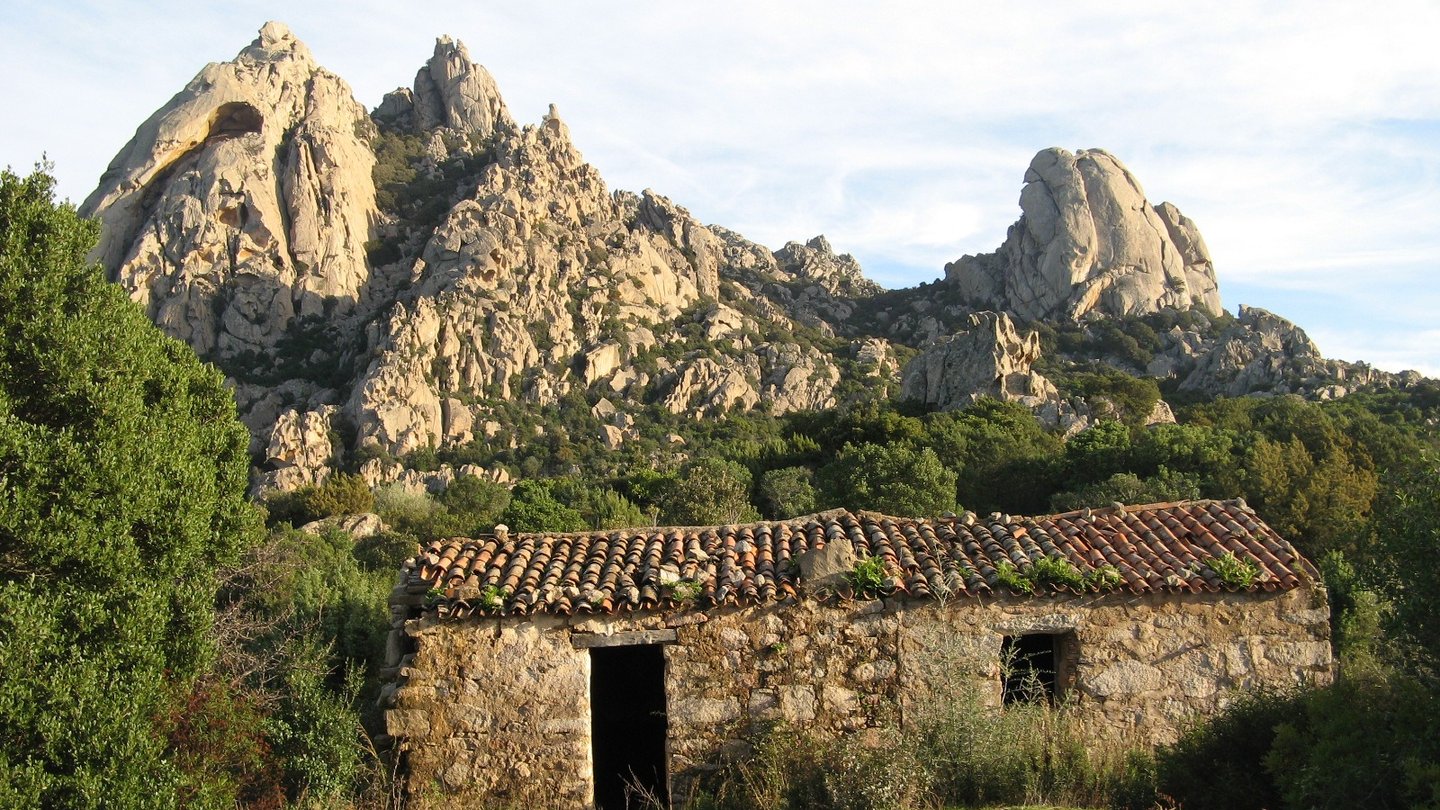
Ruins of an ancient Gallurese “Stazzo”
Life in the Galluresian Stazzi: An Ancient Rural Tradition
The Galluresian stazzi are one of the most authentic expressions of rural life in Sardinia. These settlements, which have deep roots in ancient times, are characterized by a self-sufficient agricultural-pastoral structure, where each family managed its own activities completely autonomously, while maintaining cooperative ties with the surrounding community.
The Origins of the Stazzi
Gallura is a region with a long and complex history, dating back to prehistory. Settled since ancient times, Gallura has seen many peoples pass through, from the Phoenicians to the Romans, and later the Pisans and Aragonese. However, it was in the 17th and 18th centuries, with the arrival of Corsican shepherds, that the stazzo model emerged, a type of rural settlement that met the needs of a population primarily dedicated to pastoralism and agriculture. This way of life was also consolidated by the self-sufficiency imposed by the land and the need to live in isolation. Galluresian families, therefore, built stazzi, which became small productive units where each family member played a fundamental role.
The Structure of the Stazzi
A stazzo was a collection of houses scattered across the land, built to meet the needs of intensive agricultural and pastoral work. The house of the stazzo, although simple, was the heart of family life. Inside, there were various rooms: the kitchen, the bedroom, the hearth, and spaces for storing provisions and supplies. Next to the house, there were the stables, the sheepfold, the pigsty, and other shelters for animals, essential for ensuring self-sufficiency. Each stazzo was, therefore, a small business that met daily needs, from food production to the construction of work tools.
Family and Social Life
The Galluresian family was patriarchal, with the elders serving as the guardians of traditions and culture. Each family member had a specific role: the men worked in the fields, the women took care of the house and animals, and the children helped with transporting water and guarding the livestock. Life in the stazzo was a constant alternation between hard work and moments of community, where solidarity and mutual aid were essential to overcoming difficulties.
The Manialia and Punitura: Cooperation and Support
Two concepts that characterized the social life of the stazzi are manialia and punitura. The manialia represented collective help during the most demanding tasks, such as threshing or harvesting grapes. The community would come together to face these tasks, making the work easier and creating deep social bonds. Punitura, on the other hand, was a form of assistance activated when someone suffered a loss, such as the death of an animal or damage to property. In these cases, the community helped those in need, providing support without asking for anything in return, except for the promise of reciprocity in the future.
The Economy of the Stazzi
The economy of the stazzi was primarily based on agriculture and pastoralism. They grew cereals and raised animals for meat and milk. Each family produced its own food, including bread (such as focaccia baked under the ash, lu coccu), cheeses, and meats like porcetto and lamb, along with vegetables and fruits. The agricultural system was closely tied to the cycles of nature, and each family member contributed to maintaining this delicate balance. Life was hard, but the stazzi were self-sufficient and able to meet daily needs without relying on external exchanges.
The Dialect and Traditions
The language spoken in the stazzi was Galluresian, a dialect that differed from Sardinian, influenced by Corsican and various Italian dialects. The language, like the traditions, reflected the strong identity and independence of this community. Religious and social traditions were accompanied by complex rituals, marking important moments in life such as weddings, births, and funerals, as well as festivals and seasonal celebrations.
The Cuisine of the Stazzi: Simple but Tasty Dishes
Galluresian cuisine, like the rest of life in the stazzi, was simple but rich in flavor. Homemade pasta, roasted meats, and typical dishes like suppa cuàta (Galluresian soup) were at the center of festive occasions. The suppa cuàta, for example, was prepared for weddings and other important celebrations, becoming a symbol of solidarity and good fortune for the newlyweds. The stazzi were also known for their production of cheeses, which were a fundamental element of the daily diet.
A Historical and Cultural Heritage to Preserve
Today, the reality of the Galluresian stazzi has largely disappeared due to urbanization and modernization. However, their spirit of self-sufficiency, solidarity, and connection with nature remains a heritage to be known and preserved. The stazzi represent an important historical testimony of rural life in Sardinia, one that deserves to be told and remembered, so as not to lose the connection with the deepest roots of Galluresian culture.
This page aims to be a testimony of the authentic life of the Galluresian stazzi, told with sincerity and respect for a historical tradition that has shaped Sardinia for centuries. To know the history of the stazzi is to understand the importance of community, collective work, and sustainability, which make them an example of living in harmony with nature and with others.
THE CIVILISATION OF THE STAZZI
The Gallura of the stazzi has ancient origins, but takes on the form known today only in the last few centuries. Its originality lies in a type of human settlement known as a dispersed habitat: small family units spread across the vast territory.
👨🌾 The creators of this form of settled life are shepherds and, at the same time, farmers, who have a high economic regard for themselves and feel they are masters of their own future.
They have been able to build property and substantial holdings crossed by flocks and herds; they know the farmer’s trade, feel free in their fundamental choices and independent of forms of social pressure, as well as able to respond to the problems posed by a harsh nature.
🌾 It is true that the land left fallow was far greater than the cultivated area, that the regeneration of the soil was left entirely in the hands of nature, that agriculture was almost limited to the cultivation of cereals alone, with technical solutions suited to the abilities and needs of the people who lived in the area. However, the Gallurese shepherd–farmer possessed a complex set of technical knowledge in agriculture regarding:
nature of the soils, atmospheric phenomena, structure and adaptability of plants, corrective interventions, hydraulic notions.
🔧 He made the tools, handled the animals, classified numerous data, set the agricultural calendar, and mastered systems of property and customary legal uses.
👨👩👧👦 In the Gallurese family each member had a precise productive role for the best functioning of the small pastoral farm.
🍞 Self-sufficiency in the stazzi
Each stazzo could be considered a self-sufficient unit, because:
the necessary was sown there for the family’s needs,
dairy products and meat to go with bread were produced there,
exchanges were reduced to very little.
🧵 Clothes, food and even the simple tools of work were produced there.
📚 Taken from: Gallura, Cenni storici e diversità linguistiche della Consulta Intercomunale Gallura. Editrice Taphros
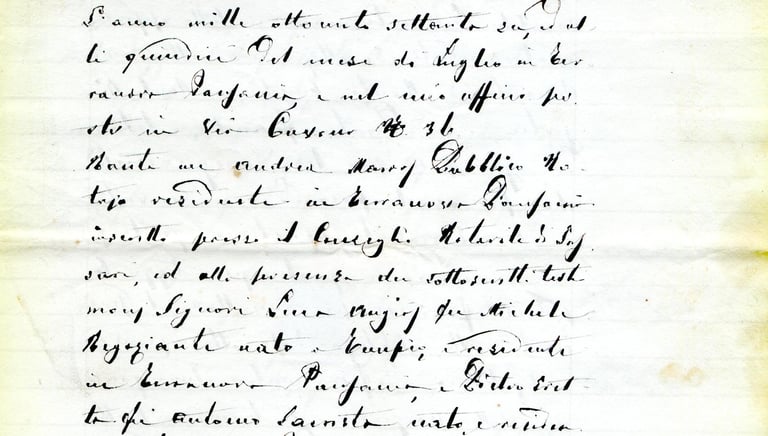
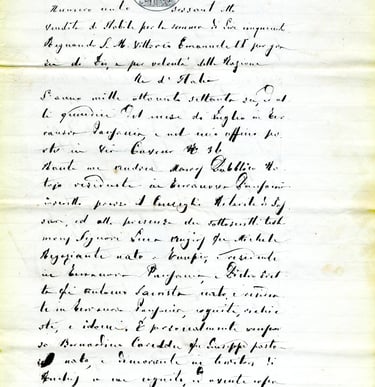
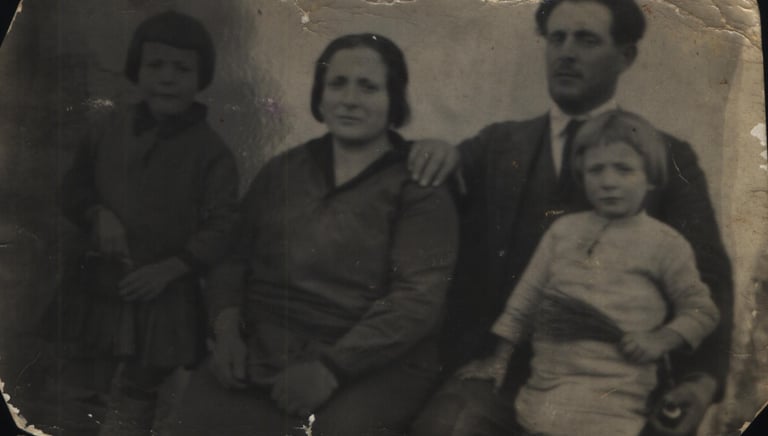
Family Photos
Atto notarile dei nostri bisnonni. Anno 1870
The Gallurese stazzo:
fulcrum of country life
“The stazzo, fulcrum and primary cell of life in the countryside, includes the house and a suitable number of tanche, used in rotation for agriculture and pastoralism.
A given group of stazzi forms the cussogghia. Each stazzo has its spring for people and a well for watering the animals."
🏠 The stazzo house
The stazzo house is made up of different rooms to accommodate: the family, almost always patriarchal, the guest and the beggar.
Other parts are set aside for foodstuffs and provisions, while not far away there is shelter for the animals.
🔹 Layout of the spaces:
Kitchen
Appusentu: the bedroom
Lu pinnenti: the storeroom
La zidda: the hearth
Lu furru: the oven
Lu salconi: the shed for the kids (young goats)
La saurra: the pen for the pigs
Lu puddagghju: the chicken coop
🪑 Furniture and fittings
In the house the furnishings and furniture are simple and practical:
La banca: the table
La cagghjna and l’uppu: wooden container for water and cork ladle
Lu banconi: a sort of bench or daybed
La cridenza: the cupboard
L’incanicciatu: the lattice
La festina: trunk of an old juniper with branches used for hanging objects
Lu balastragghju: kitchen cupboard
👩🌾 The inhabitants of the stazzo
A closer analysis must be made of the people of Gallura, with their strengths and weaknesses, in order to understand:
why they distributed the territory in that way,
how they built their houses,
how they invented their language.
Central values:
Solidarity: an institutionalised form without the need for written codes.
La punitura: a system similar to asking for a bank loan without interest. Those who suffer damage (to the flock or other goods) can ask for help and receive what they have lost or what they need.
La manialia: the involvement of the community to support work that the individual could not manage alone, either because of the effort or the costs.
🎉 The great moments of life
Birth, marriage and death are accompanied by:
complex and solemn rites,
precise customs that go beyond religious ceremony.
The institution of the family follows the patriarchal system, with the elders acting as educators and custodians of traditions.
🌾 The economy of the stazzo
The economy, often poor but never wretched, is based on:
agriculture and pastoralism,
hunting and beekeeping.
Autonomy and the exchange of products form the basis of the economic system.
🍞 Gallurese cuisine
Food is essential and highlights the typical products of the stazzo:
Bread: such as lu coccu illa zidda (unleavened flatbread baked under the ashes of the hearth).
Meats and dairy products:
Roasts of suckling pig, lamb and kid.
La rivea (grilled offal of lamb or kid).
Boiled meat and broth.
La suppa, mazza frissa, lu casgiu furriatu, l’ociu casgiu.
Cheeses:
Pischedda, li buttoni, lu casgiu ruzzu, lu casgiu fràcicu.”
📚 Taken from: La Gallura, persone, storie e fatti di Don Nanni Columbano Rum
ANCIENT LAND OF GALLURA: HISTORICAL INSIGHT
“Gallura: a unique landscape"
Gallura is made up of sea, plains, hills, mountains, cultivated areas and deserted heathland. Enthusiasts of archaeology can find, in this environmental diversity, evidence of the pre-Nuragic, Nuragic, Punic, Roman and medieval civilisations.
But what more than anything else characterises the landscape of Gallura are the granite rocks which, smoothed or jagged by wind and rain, take on the form of miniature mountains and extraordinary natural sculptures.
🏡 The stazzo: fulcrum of rural life
Characteristic of Gallura is the scattered rural settlement made up of the stazzi, self-sufficient agro-pastoral farms created, in origin, by shepherds, many of whom came from Corsica between the seventeenth and eighteenth centuries.
The stazzo comprised:
A house,
The sheepfold, the cowshed (vaccile), the pigsty,
The vegetable garden and the vineyard.
Part of the land was used for the cultivation of cereals, and part for open grazing. Numerous and flourishing until a few decades ago (about 2,200), many stazzi have been abandoned because of urbanisation.
🗣️ The Gallurese dialect
The Gallurese dialect does not derive from the Sardinian language, but from Corsican and from varieties of Tuscan, Ligurian and Italian, enriched with Catalan and Spanish influences. It seems that the stazzi were built, in the mid-eighteenth century, by Corsican refugees in search of tranquillity.
The house in the stazzo
During the period of prosperity (1850–1870), the stazzo house was simple:
A single masonry room with an earthen floor,
Lu fuchìli: the hearth, bordered by stones, in the centre of the room,
Racks hanging from the ceiling to store cheese, rennet and cured meats,
Essential furniture such as:
La banca (table), Lu bancu (a bench similar to the Roman triclinio), La lùscia (cylindrical container for grain).
Near the house were:
The sheepfold, the pigsty, the stable, the vegetable garden, the vineyard and the clearings used for cultivation and grazing.
👨👩👧👦 The family in the stazzo
The family was patriarchal: the elders watched over as guardians of traditions and the household economy. Each member had a role:
The men worked in the fields,
The women took care of household tasks,
The children looked after the animals and carried water from the spring,
Even people with disabilities and beggars found a role in the stazzo.
🌾 Cycles of life and work
The sacred character of the stazzo was linked to the cycles of nature:
Wheat (and bread), milk, wine, meat.
Social activities included:
The slaughtering of the pig,
Threshing,
The grape harvest,
Li manialìi: collective help for the most demanding work.
Engagements, weddings and funerals also followed complex and solemn rites.
⚖️ Values and justice
Li rasgioni: legal disputes settled by trusted elders, without recourse to the courts,
Li paci: reconciliation ceremonies,
Religious feasts in the churches scattered through the countryside.
🏗️ Evolution of the stazzo
With the pre-industrial and industrial periods:
The stazzi were modernised,
The furniture was enriched with new pieces,
The first schools were housed in abandoned stazzi.
However, the abandonment of rural work and consumerism upset the traditional rhythms.
LUNCH IN THE STAZZO
The hard life of the stazzo and its typical dishes
The hard life of the stazzo was often brightened by dishes of excellent flavour which represented (and still represent today, revised and adapted) the typical dishes of festive gatherings.
Leaving aside everyday foods, though very tasty, based on:
🍝 Homemade pasta (tadharìni and fiurìtti: tagliatelle and long pasta cut by hand from the sheet),
🥣 Pasta and beans,
🥔 Pasta and potatoes,
🥬 Products of the vegetable garden and common meats,
it can be said that many of these dishes are fundamental for understanding the “civilisation of the stazzo”.
🥘 La suppa cuàta (Gallurese soup)
Today it is known as suppa cuàta (“hidden soup”), but in the past it was simply called la suppa.
Already present, it seems, in Gallurese cooking in the eighteenth century, it is one of the most characteristic dishes of the food economy of the stazzo, based mainly on the products of:
🌾 Wheat, 🥬 The vegetable garden, 🥛 Milk.
A dish for great occasions
When weddings were celebrated in the family, la suppa was the highlight of the rich wedding banquet. For the occasion, a magnista (cook) of proven experience was called, because the wedding suppa had to be excellent, worthy of being mintòu (worthy of remembrance) and a symbol of the good fortune of the spouses.”
📚 Summary of sources:
Antica Terra di Gallura by Franco Fresi, Editrice Taphros.
Gallura, Cenni storici e diversità linguistiche della Consulta Intercomunale Gallura, Editrice Taphros.
La Gallura, persone, storie e fatti by Nanni Columbano Rum, Edizioni Della Torre.
Sardinian and Gallurese Recipes
Collection of some typical recipes
from our kitchen
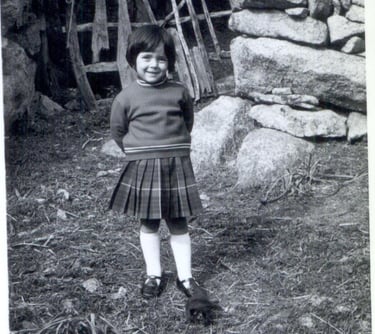
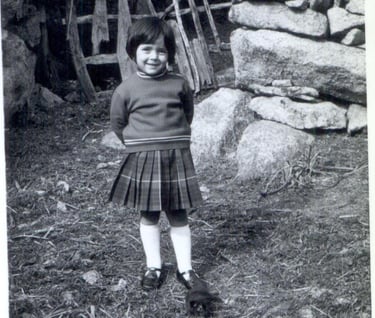
Monica
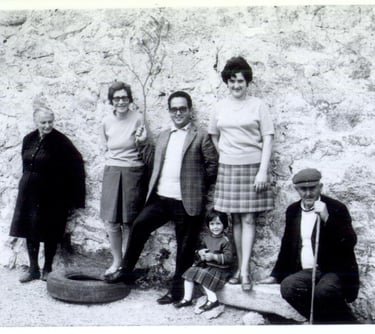
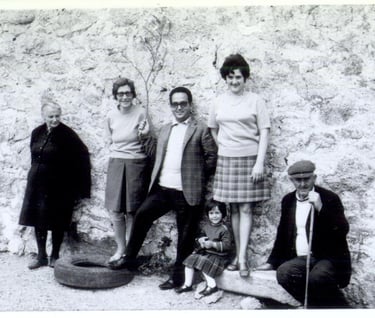
The Whole Family
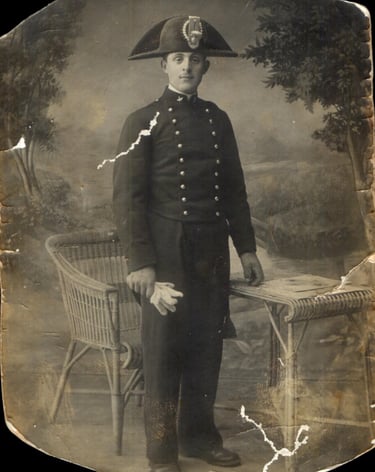
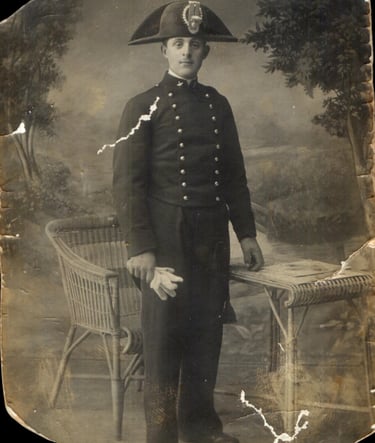
The Grandfather

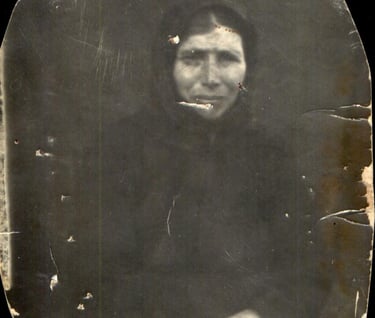
The Great-Grandmother
You are here: History & Recipes
Sardinian and Gallurese Recipes
Contact Us
Official Website of Agriturismo Agrisole di Derosas Monica
via Sole Ruju, 7 07026 Olbia (SS)
P.I 01770480901
CIN IT090047B5000A0126
⚠️ For safety reasons, it is forbidden to bring pyrotechnic candles, fireworks or other objects that may cause harm to people, animals or property onto the premises